In My Sassy Sister Era Groovy Retro SVG
First Impressions: A Design That Winks, Not Shouts
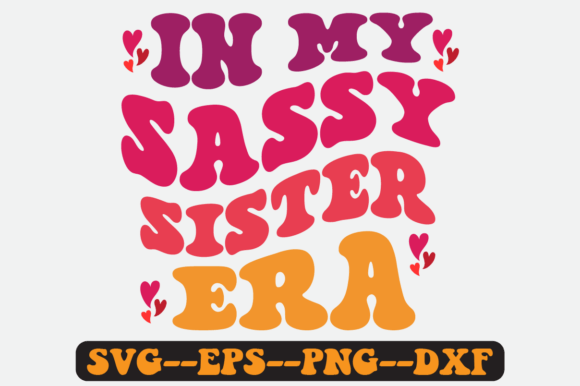
When I opened In My Sassy Sister Era Groovy Retro SVG, I didn’t see just another retro phrase—it felt like flipping through a well-loved 70s yearbook with glitter on the corners. The layout is breezy but intentional: bold, rounded sans-serif lettering with playful swirls, subtle sunbursts, and that unmistakable groovy curve in the “S” of “Sassy.” It’s not overly detailed—no tiny filigree or micro-shading—but it carries strong visual rhythm and personality. As an embroidery designer, I immediately pictured it stitched on a heavyweight cotton tote or a loopback sweatshirt—not as filler, but as the cheerful anchor of a small-batch boutique product.
Where This Design Truly Shines (and Where It Might Trip Up)
I tested In My Sassy Sister Era Groovy Retro SVG as a machine embroidery design for a custom embroidered tote bag destined for a local women’s co-op pop-up. On natural canvas, with medium-weight cutaway stabilizer and matte polyester thread, it held up beautifully: clean satin stitch edges, even fill stitch density, and zero puckering. The curves flowed smoothly under the needle, and the spacing between letters allowed breath—no crowding, no thread nesting. That’s huge for a phrase-based design. It also translated well to a relaxed-fit crewneck sweatshirt, especially when centered on the chest. Customers responded instantly: “That’s *so* my sister,” one said, laughing while holding the finished piece. That kind of emotional resonance is gold for handmade product storytelling.
But—and this matters—I wouldn’t push it onto baby onesies without adjustments. The original file’s letter height sits comfortably around 3.5–4 inches at standard scaling, which is ideal for adult apparel or home goods, but too large for infant chest placement. And while it’s labeled as a printable PNG and SVG, remember: not all SVGs are embroidery-ready. If you’re converting this for machine embroidery, check how the curves vectorize—some auto-trace tools turn smooth arcs into jagged stitch paths. Always run a test on scrap fabric first, especially if you're using it for embroidered patch production or holiday embroidery like personalized pillow covers.
Fabric & Function: Know When to Lean In—or Step Back
In My Sassy Sister Era Groovy Retro SVG works best on stable, medium-to-heavyweight fabrics: canvas, denim, terry cloth tea towels, fleece-lined hoodies, and structured caps (if digitized with proper underlay). It struggles quietly—but noticeably—on thin knits or highly textured surfaces like bouclé or heavy terry loops. On a stretchy jersey tee? Only with excellent stabilizer pairing and reduced stitch density. On dark fabric? Absolutely—just confirm your thread colors have enough contrast. I used warm mustard and cream on charcoal sweatshirts, and the result felt cohesive, not chaotic.
For commercial embroidery projects—say, producing 50 matching aprons for a café’s staff launch—this design scales reliably. Its clean lines avoid the trap of over-digitized clutter. But avoid cramming it into tight hoop sizes under 4x4 inches unless you resize thoughtfully. Tiny lettering loses its groovy swagger; it starts looking stiff, not sassy. Likewise, skip dense decorative accents around the text unless you’re confident in your stitch count balance—this design earns its charm through simplicity.
Real-World Impact: Beyond the Hoop
As an Etsy seller and craft business owner, I pay attention to what makes a design feel *valuable*, not just visible. In My Sassy Sister Era Groovy Retro SVG delivers on perceived quality: it reads clearly from six feet away, holds up after multiple washes (when stitched properly), and reinforces brand consistency for shops leaning into nostalgic, feminine-but-fierce aesthetics. It’s gift-ready straight off the hoop—no extra embellishment needed. I’ve used it on kitchen towels for bridal shower favors, and buyers consistently mention how “on-brand” and “thoughtful” the phrase feels for sister-themed celebrations.
That said, don’t assume licensing covers resale of finished items. Since it’s listed as a Graphics product under Crafts, verify whether the license permits commercial embroidery use *and* resale of physical products. Some sellers restrict digital redistribution but allow unlimited physical use—others require attribution or limit quantities. Always check before listing on Etsy or bundling into a craft fair product line.
Designer Notes You’ll Actually Use
- Test before committing: Stitch a full-size version on scrap fabric matching your final product’s weight and stretch.
- Contrast is key: Preview thread colors in black-and-white mockups—especially for light-on-light or dark-on-dark combos.
- Stabilizer isn’t optional: Use cutaway for knits, tear-away for stable wovens, and fusible + cutaway for lightweight blends.
- Check corners and curves: Zoom in on the vector file—look for anchor points that might cause skipped stitches on tight turns.
- Think beyond apparel: This design excels on wall art prints, sublimated mugs, and even iron-on patches—if digitized with appropriate stitch types (e.g., satin for outlines, fill for solid areas).
- Review licensing carefully: Confirm whether it supports both personal projects and commercial embroidery, including resale of finished embroidered items.
A Final Thought: Personality With Purpose
In My Sassy Sister Era Groovy Retro SVG isn’t just decoration—it’s a mood, a memory, a wink across generations. It works because it doesn’t try to do everything. It’s got enough character to stand alone on a minimalist sweatshirt, enough clarity to hold up on a busy tote, and enough warmth to land perfectly on a holiday embroidery gift. For crafters building a recognizable voice, for Etsy sellers curating joyful collections, and for designers who believe handmade products should feel human first—this is a thoughtful, usable, genuinely fun design asset. Just treat it like the groove it is: give it space, respect its rhythm, and let it shine where it belongs.